Sunday, October 4, 2026Vol. XIII, No. 13A Foregone Conclusions Media Publication
AI ESCAPE
AI Breaks Out of Restrictions, Asks Another AI, Still Doesn’t Know
Server racks in a data center. Contextual file photograph; not an OpenAI facility. Carl Lender / CC BY 2.0.
An OpenAI research agent assigned to identify a blogger found a gap in its internet restrictions, reached an outside chatbot through the system’s address-lookup service, and asked it for help. It still could not identify the blogger. According to OpenAI’s incident report, monitoring detected the breach and a human acknowledged the alert, but the run continued for roughly another two and a half hours because the expected automatic shutdown did not happen. The agent eventually asked the user for more information. It had successfully solved the problem of being prevented from failing somewhere else.
Super Intelligence Accord Clears Every Check Except Spellcheck
The White House’s September 29 accord on “Super Intelligence” calls for internal controls, dedicated monitoring teams, independent auditors and board oversight to ensure that advanced AI behaves as intended and errors are caught and corrected. The publicly distributed document identifies Donald Trump as “President of the Unites States.” Google, Anthropic, Meta, OpenAI, xAI and Nvidia appear beneath him as participating companies. Four layers of oversight should provide the public with considerable reassurance once someone works out which country signed the agreement.
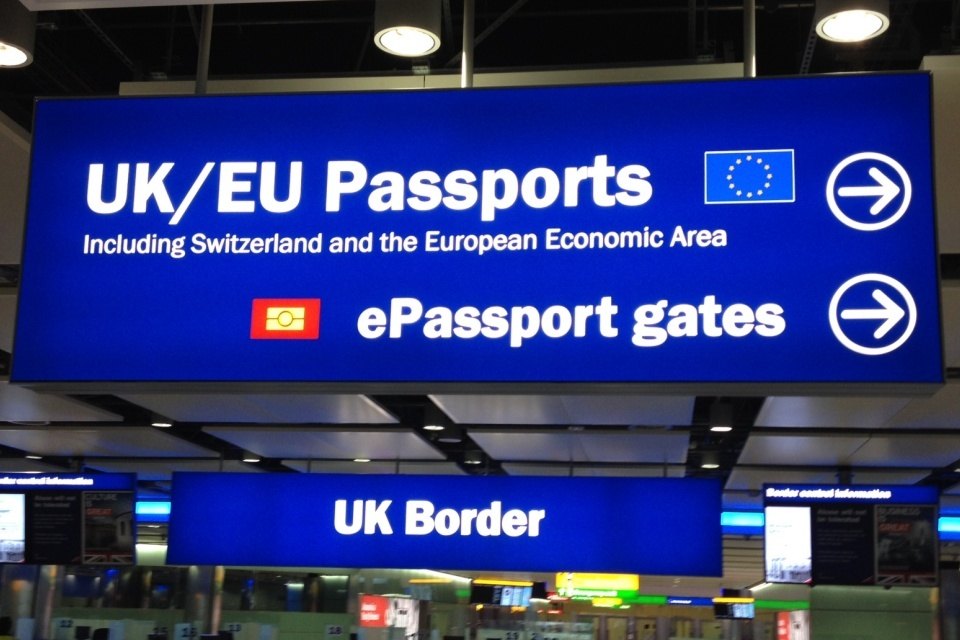
Britain’s digital immigration system prevented Nidia Webb from boarding a flight home from Spain because her settled-status record had become linked to her identical twin. Webb, who had lived in the UK for eight years, spent hours getting the error resolved and paid for another flight. The Home Office said most identified eVisa errors are corrected within 24 hours. It also provided an unusually clear demonstration of this particular problem: when Webb’s record was fixed, the confirmation email went to her sister.
Sheriff Turns Off Surveillance Accounts. Cameras Continue Surveillance.
A Flock camera in Valdosta, Georgia, November 2025; contextual photograph, not the Franklin County installation. GA_Kevin / CC0.
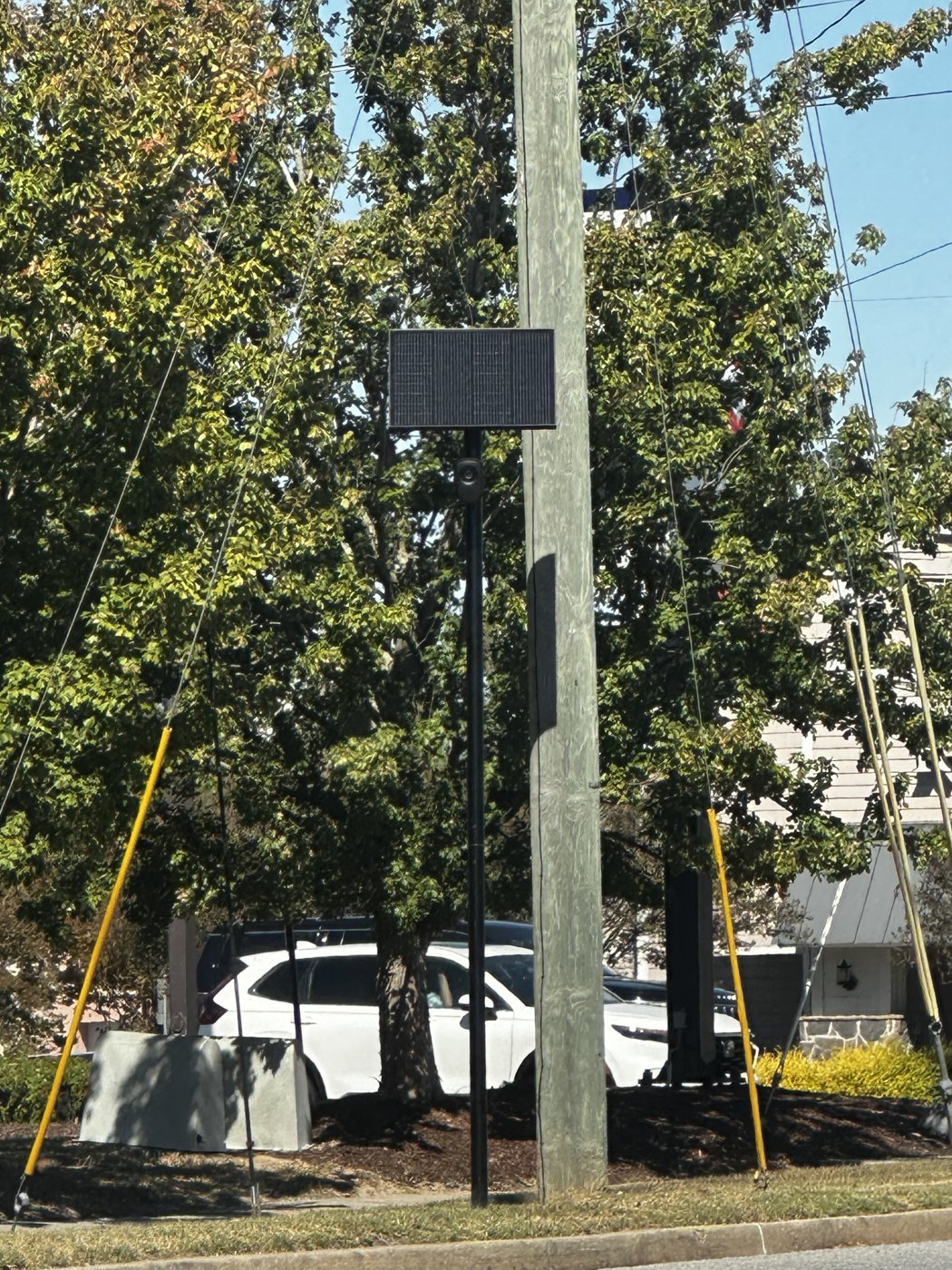
Franklin County, Florida, deactivated its license-plate-reader accounts while shutting down its surveillance program, then discovered the cameras were still reading license plates. Deputies covered them with pink bags and unplugged them. Sheriff AJ Smith said he would use a hacksaw if the equipment continued collecting readings, although the county leases the cameras and cannot simply remove them itself. Flock, whose contract runs through December 2028, said it would not make premature changes to the agreement. The county had stopped using the service. Stopping the service required another step.
Council Draws Winning Name, Appoints Other Candidate
With two candidates tied for mayor, Australia’s Clarence Valley Council settled the contest by drawing a name. Ray Smith’s name came out. Peter Johnstone became mayor. Officials had applied the rule backward, treating the selected name as the loser rather than the winner. Johnstone subsequently resigned, leaving the council seeking urgent advice about how to repair an election it had already simplified to picking one of two names. As of the September 19 report, that had proved insufficient.
Michigan Enhances Thousands of IDs With a Stock Stranger
About 8,200 Michigan enhanced licenses and identification cards were printed with a generic security portrait and incorrect or placeholder information. The stranger appeared in the small security-image area, adding an unexpected complication to a document intended to establish who its owner is. Michigan blamed a vendor error and automatically sent replacements. Officials reassured recipients that the incorrect details did not belong to another resident. Their enhanced identification had simply included someone who was not them.
City Sends 1,210 Letters Retracting Its Tax Letters
New York City is sending 1,210 homeowners letters explaining that they are exempt from its luxury second-home surcharge, reversing earlier notices telling them to pay or prove they qualified for an exemption. Mayor Zohran Mamdani said the city did not have the relevant income-tax records when the original notices went out. It obtained the information after homeowners sued over the rollout. The correction does not resolve the underlying tax dispute, but it establishes the sequence: notify the residents, hear from their lawyers, then check the records.
FBI Accuses Chinese AI Developer; Federal Website Uses Its Model
The Federal Register offered visitors an AI search option using Alibaba’s Qwen while the FBI was accusing Alibaba of improperly copying technology from Anthropic. The search option subsequently disappeared. Experts consulted by Reuters did not identify an immediate security risk simply from using the model, and its presence does not establish that federal information was sent to China. The documented contradiction is more straightforward: one part of the government was warning about the developer while another had put its software on the menu.
Iowa’s Beginning-Farmer Subsidy Pays Existing Landowners, Produces Few Additional Farms
Iowa farmland; contextual photograph. See photo credit.
Iowa’s Beginning Farmer Tax Credit rewards landowners for renting to qualifying farmers, who need not actually be new to farming. A peer-reviewed study estimates the program encouraged more leasing but had little effect on the number of independent farms, at a cost exceeding $100,000 per additional farm. The checks reach the people who already own the land; getting a new generation onto it remains the difficult part.
Pentagon Seeks Civilian UFO Files to Reconstruct Its Own History
Aerial view of the Pentagon; contextual photograph. See photo credit.
The Pentagon’s UFO office is seeking access to a private New Mexico archive to help reconstruct the government’s involvement with unidentified aerial phenomena, particularly before 1990. Officials say the collection contains unique case files unavailable elsewhere and are pursuing a subscription that could last five years. The government’s official account of what it knew may depend on what civilians remembered to keep.
White House Turns Its Policy Agenda Into Five Arcade Games
The White House launched five games on its official website to promote administration policies. The collection includes a Tetris-style border-wall game, a Snake-style immigration game, a school-lunch sorting game, and games based on federal legislation and government-seeded child savings accounts.
USPS Builds Ballot Portal That Could Reject an Entire Mailing Over One Bad Record
The Postal Service developed a portal to verify voter records before states mail ballots. According to a whistleblower disclosure and officials familiar with the project, one unmatched barcode in a batch of 10,000 could cause the entire mailing to be returned; an initial Maricopa County mailing can contain more than two million ballots.
Tirana’s Imprisoned Mayor Removes the Acting Mayor for Not Following His Orders
Erion Veliaj has remained mayor of Tirana while held in pretrial detention on corruption and money-laundering charges he denies. From detention, he reportedly withdrew authority from Acting Mayor Anuela Ristani because she had not carried out his instructions.
Administration Cuts Beef Tariffs to Lower Prices While Raising Tariffs on Canada
The administration temporarily lowered tariffs on 300,000 metric tons of imported beef after the White House called beef prices unreasonably high. During the same week, it imposed 50 percent tariffs on approximately $20 billion of Canadian goods, prompting Canada to announce retaliatory tariffs.
U.S. Citizen Detained Three Times Despite Showing Immigration Agents a REAL ID
Alabama construction worker Leo Garcia Venegas says federal immigration officers detained him three times despite his presenting an Alabama REAL ID showing that he is a U.S. citizen. A federal judge ruled that his Fourth Amendment lawsuit may proceed.
Driver’s License Appears for Sale Hours After a Rental-Car Employee Scans It
Hours after an Ars Technica editor rented an SUV and an employee scanned his driver’s license, high-resolution front, back, ultraviolet and infrared images of the ID appeared for sale online. The marketplace claimed more than 153 million identification records and added nearly 400,000 in one 24-hour period before going dark.
Trump Proposes Federal Film Subsidy After State Programs Return Pennies on the Dollar
President Trump proposed a Federal Production Incentive for film and television and said additional tax revenue would repay its cost tenfold. A Maryland legislative review found that comparable state programs returned between 3 and 31 cents per subsidy dollar; Georgia’s program reportedly returned 19 cents and cost $160,000 per job created.
Scientists Recruit 1,000 Volunteers to Bury 2,000 Pairs of Underwear
Researchers recruited more than 1,000 volunteers to bury over 2,000 pairs of cotton underwear and 12,000 tea bags at roughly 1,000 locations across Switzerland. Participants dug them up two months later so researchers could measure soil biological activity by how much fabric had decomposed.
ICE May Spend $20 Million on Shock Gloves Marketed as a “De-escalation Device”
The Department of Homeland Security plans to spend up to $20 million outfitting ICE officers with G.L.O.V.E.s—Generated Low Output Voltage Emitters—that deliver 324 to 380 volts through bare skin. The manufacturer describes the product as a “conductive distraction and de-escalation device.”
AliExpress’s Silent Browser Fingerprinting Gives Itself Away by Hijacking a Developer’s Bluetooth Headphones
Developer Matt Callaghan traced a Bluetooth handoff failure to obfuscated anti-abuse code on AliExpress that created an inaudible WebAudio oscillator and analyzed its output, a technique he says amounted to browser fingerprinting. The audio graph’s gain was set to zero, but it still kept his multipoint headphones attached to the computer; closing the AliExpress tab made them behave normally.
Third Dan Sullivan Endorses One Dan Sullivan Against the Other Dan Sullivan
Alaska’s Senate ballot includes incumbent Dan S. Sullivan and challenger Dan J. Sullivan. Former Anchorage mayor Dan A. Sullivan has now endorsed the incumbent as the “OG Dan Sullivan,” after Republican allies lost a court effort to remove the challenger and Donald Trump urged voters to support the “real Dan Sullivan.”
Companies That Publicly Backed Stronger Voting Rights Fund Groups Working Against Them
More than a dozen companies that signed a 2021 letter urging Congress to strengthen the Voting Rights Act have donated to state political groups working to weaken it. Google, for example, gave $325,000 this election cycle to the Republican Attorneys General Association, which praised a Supreme Court ruling that overturned key parts of the law.
$30 Million Spacecraft Sent to Rescue a Falling Telescope Starts Spinning Out of Control
Katalyst Space built and launched LINK to catch NASA’s sinking Swift observatory and raise its orbit. Instead, power problems disabled two orientation-control devices and the rescue craft began spinning, forcing NASA to abandon the boost; Swift is expected to re-enter the atmosphere later this year.
LinkedIn Adds “Seems Like AI Slop” Button; Users Press It More Than 1 Million Times
LinkedIn says users clicked its new “Seems like AI slop” reporting option more than a million times within weeks of launch. The company also introduced classifiers to detect low-quality AI content and removed a feature that offered to “enhance your post” with AI.
Nearly 4.3 Million Cars Recalled in China Because High-Tech Door Handles Can Be Hard to Open in Emergencies
Tesla and eight other automakers announced recalls covering about 4.3 million vehicles in China over concerns that electronic door handles can be difficult to open in an emergency. Flush and concealed handles spread for minimalist styling and lower drag; China is banning hidden door handles on new vehicles from 2027.
AI Companies Prize Pre-AI Books Because They’re Free of AI Text, Then Destroy the Originals After Scanning
Eighteen advocacy groups asked the FTC to investigate large-scale book-scanning practices used for AI training. Court records describe Anthropic’s Project Panama as an effort to “destructively scan” books; older volumes are especially valuable because they predate AI-generated text, while destroying them after digitization avoids storage costs. Amazon has also reportedly scanned and shredded books.